Pyrenees Snowshoeing Day from Barcelona
Winter mountain walking for non-skiers — no experience needed
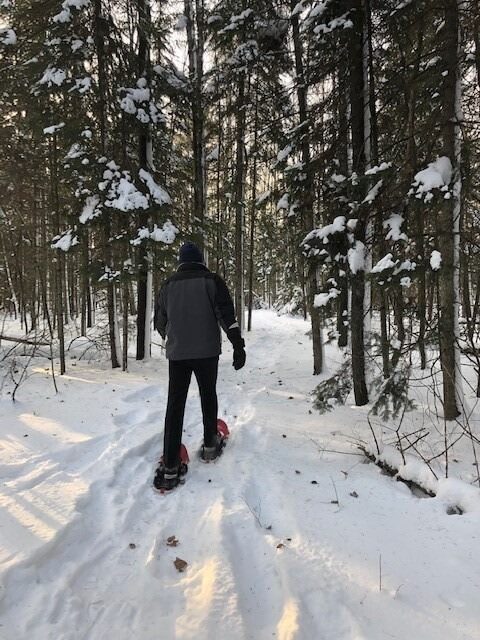
Winter mountains, without the skis
Snowshoeing is the oldest form of winter mountain travel — strapping wide, floating shoes to your boots so you don't sink into deep snow. It's quiet, meditative, and anyone who can walk can do it. There is no technique to learn, no equipment to fear, no lifts to buy. We drive you from your Barcelona hotel to a quiet trailhead in the Catalan Pyrenees and spend four or five hours walking through snow-covered pine forest with a local guide. By the end of the afternoon you've seen a side of the Pyrenees that skiers racing between lifts never notice.
We designed this tour originally for mixed groups travelling to Barcelona in winter where not everyone skis. In practice we now see it booked just as often by solo travellers who want a mountain day without the organising, by couples where one partner is nervous of ski resorts, and by people who just prefer the quieter version of a winter mountain day.
What snowshoeing is actually like
If you can hike on summer trails for four hours, you can snowshoe. The snowshoes themselves are modern aluminium-frame units weighing about 1.5 kg per pair. They strap over your winter walking boots with simple buckles. You walk normally — you don't need to learn a new gait — just with your feet slightly wider apart to account for the width of the shoes. Walking poles help with balance, especially on gentle inclines.
What you'll notice first: the silence. A snow-filled pine forest absorbs almost all sound. The second thing: how much easier it is than people expect. On a flat forest trail you'll walk at roughly 2.5–3 km/h, slower than summer hiking because of the fresh snow but entirely conversational. On gentle climbs it's slower still — figure 1.5 km/h — but the forest is beautiful and nobody is in a rush. Over four to five hours we typically cover 8–12 km total with 200–400 metres of elevation gain.
Where we go
Our main snowshoeing routes are in the Cadí-Moixeró Natural Park, on the Catalan side of the Pyrenees about two hours from Barcelona. Three favourites, chosen on the day based on snow conditions, weather and the group's fitness:
- Prat d'Aguiló valley. A gentle forested approach to a flat alpine meadow at 1,900 m with huge views across to the Cadí massif. Low difficulty, 8 km round trip, 250 m climbing.
- Bastanist refuge loop. Through pine and beech forest to a working mountain refuge where we can stop for lunch (not included). Medium difficulty, 10 km, 400 m climbing.
- Niu de l'Àliga ridge. A climb to an exposed ridge with full-circle Pyrenean panorama. Higher difficulty, 12 km, 550 m climbing. Only on clear days.
Who the snowshoeing day suits
- Non-skiers who want a day in the snow.
- Mixed groups with skiers and non-skiers — one partner can book our Masella ski day while the other does this, and we can co-ordinate pick-up times.
- Experienced hikers who want a winter alternative to summer trail walking.
- Older travellers in good general fitness who don't want to risk a ski injury.
Who it doesn't suit: people with mobility difficulties affecting ankles or knees; anyone who is very unfit (four hours of walking is still four hours); children under ten (we have had younger kids but the trail length is tough on short legs).
What you need to bring
From Barcelona: warm hiking clothing (not necessarily ski gear — walking is warm), a waterproof shell layer in case of light snow, sturdy winter walking boots, warm socks, gloves, hat, sunglasses, a small backpack with snacks and a water bottle. Sunscreen matters — snow reflects a lot of UV. The guide provides snowshoes, walking poles and a safety whistle.
You don't need: ski clothing, specialist equipment, previous experience, or avalanche training. The routes we use are forested or on gentle meadow terrain — no avalanche-exposed slopes.
A day on this tour, hour by hour
Season and conditions
We run snowshoeing tours from early January through to the end of March, snow permitting. The best conditions are typically mid-January through mid-February, when the snow is deep in the valleys and the trails are properly set. December is sometimes too early (not enough snow in the Catalan pre-Pyrenees); late March can be too warm (slushy afternoons). If snow is bad at our usual trailheads we may suggest driving to a higher one — we'll always confirm the route and conditions the evening before.
What's included — and what isn't
Included
- Private minivan transfer from your Barcelona hotel
- Experienced local guide (English and Spanish)
- Snowshoes, walking poles and small backpack for the day
- Coffee stop on the way up, bottled water
- Drop-off at your hotel in Barcelona at the end of the day
Not included
- Lunch (we stop at a mountain restaurant or pack a picnic)
- Warm winter clothing (you bring your own)
- Travel insurance
- Avalanche safety training (route is low-risk, no avalanche terrain)
Enquire about this tour
Tell us when you're in Barcelona and how many of you want to ski. We reply within one working day with availability and pricing.